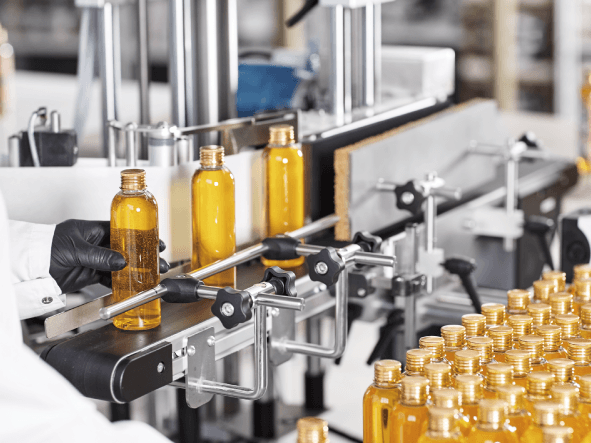
Food & Beverage
Atmosphere control, modified atmosphere packaging, and fluid measurement for food and beverage production.
Industry Scope
Food & Beverage
Gas systems for optoelectronic manufacturing must be designed together with equipment space, process recipes and maintenance strategy.
Food and beverage is a major industrial-gas application outside electronics. Modified atmosphere packaging (MAP) replaces air inside the package with food-grade nitrogen, carbon dioxide, and oxygen to inhibit microorganisms and slow oxidation, extending shelf life while reducing chemical preservatives.
Nitrogen displaces oxygen and moisture to prevent lipid oxidation and aerobic microbial growth; research shows microbes struggle to multiply below ~1% residual oxygen. It also maintains package volume and protects fragile foods like chips. Carbon dioxide dissolves to lower pH and provides strong antimicrobial effect; red meat retains some oxygen to keep its color. Blends vary by product: dried foods use 100% N₂, fresh pasta 50% N₂/50% CO₂, and cooked ham or sliced poultry typically 70% N₂/30% CO₂.
Package quality depends on blend precision. At high line speeds, residual oxygen depends on purge efficiency, seal micro-leaks, and film permeability — controlled at the milliliter-per-package level. Inline headspace analyzers (electrochemical, zirconia, laser, or NDIR) verify O₂/CO₂ compliance.
In beverages, nitrogen purges or pressurizes filling lines to prevent container collapse and degasses liquids; nitrogen beer and coffee deliver a richer mouthfeel. On-site gas blenders produce food-grade mixtures on demand, replacing pre-mixed cylinders to cut cost and inventory.
HNR supplies gas blending, mass flow control, and headspace analysis products for food packaging and beverage lines, helping customers stabilize blends, control residual oxygen, and meet food-safety requirements.
Process Path
Key Process Stages
01
Recipe Input
Confirm carrier gases, reactant gases and switching logic.
02
Stable Execution
Match flow control, valves and pressure boundaries.
03
Chamber Observation
Configure vacuum and composition monitoring per process needs.
Engineering Constraints
Measurement and Control Challenges
Multi-Branch Coordination
Branch switching and common-manifold disturbances must be assessed at system level.
Space Constraints
Modular connections help organize gas lines inside compact equipment.
Maintenance Boundaries
Define wear parts, isolation points and leak-check paths in advance.
Solution Path
From Operating Conditions to System Configuration
Start from the equipment gas-line diagram and action sequence to confirm products, connections and control interfaces.
Related products
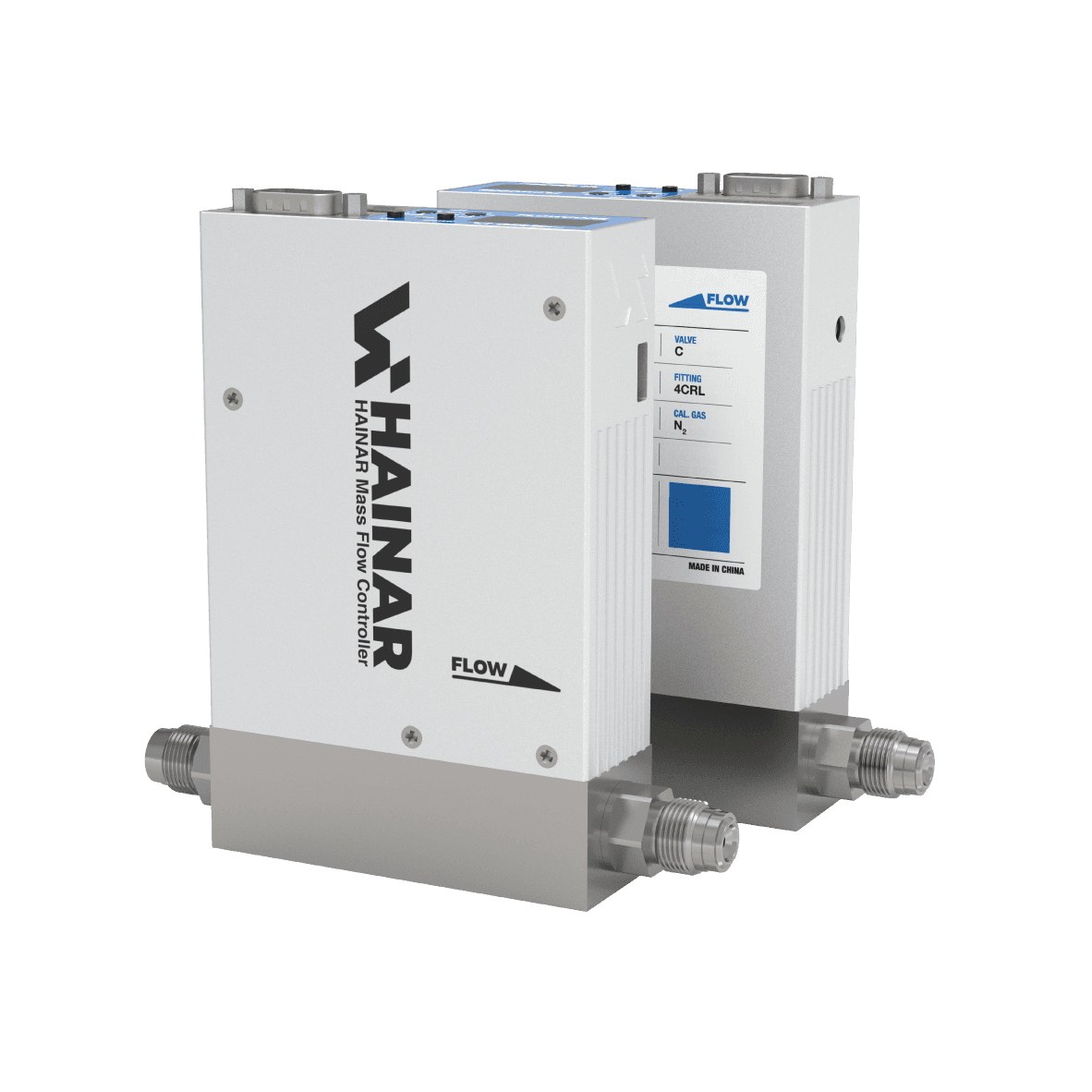
PS300 Differential-Pressure Mass Flow Controller
Differential-pressure mass flow controller for precision fluid control and ultra-high-purity gas systems. High-speed pressure sensors and fast, stable piezoelectric actuators combined with a 32-bit CPU deliver response below 0.8 s across the full flow range. Calibrated against real process gases with a built-in gas property database.
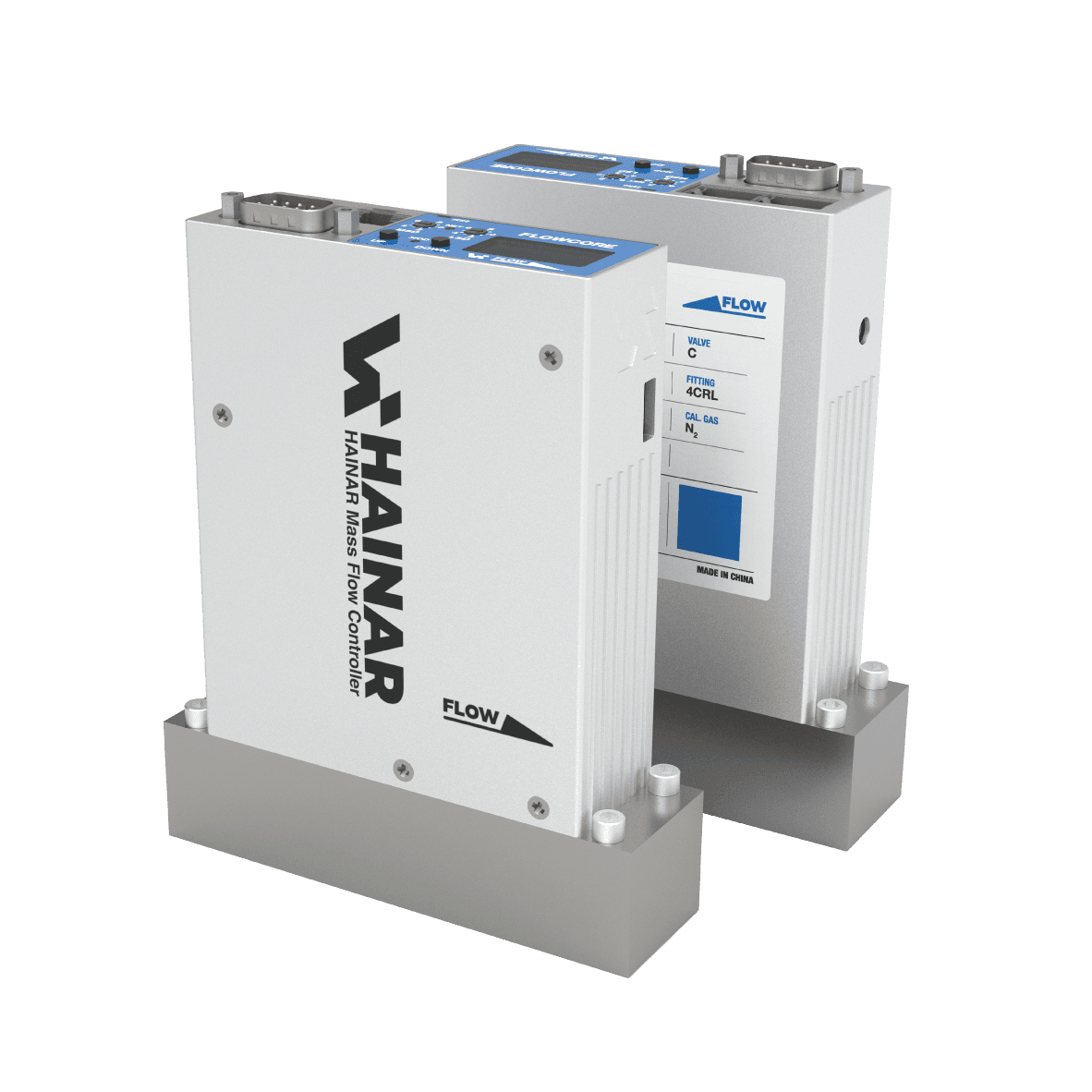
PS500 Differential-Pressure Mass Flow Controller
Precision gas flow control for advanced semiconductor manufacturing. Measures differential pressure across a laminar flow element for high-sensitivity wide-range flow measurement. Low dead-volume piezoelectric metal diaphragm inlet valve with a 2 ms control cycle delivers fast response and high-resolution control.
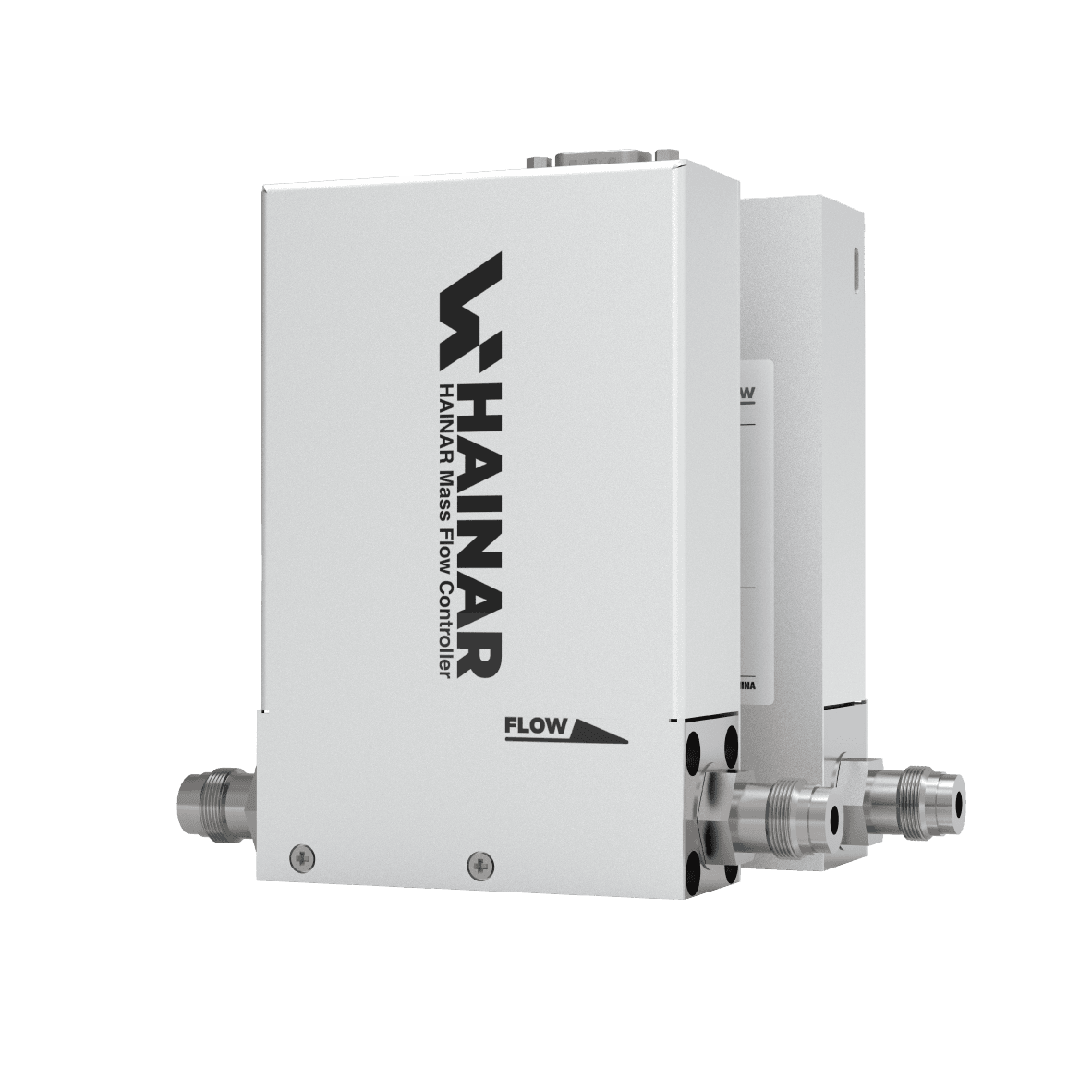
TE100 Thermal Mass Flow Controller
Economical mass flow controller using capillary thermal-differential sensing. Measurement accuracy is independent of temperature and pressure. 316L stainless steel body with maximum working pressure of 450 kPa and traditional solenoid proportional valve - the best solution for cost-sensitive applications.
TE500 Thermal Mass Flow Controller
Thermal mass flow controller for process gas measurement and closed-loop control; configuration confirmed per project.
TE700 Thermal Mass Flow Controller
Thermal mass flow controller for process gas measurement and closed-loop control; configuration confirmed per project.